
Natural Stone Paving Aftercare
Practical guidance for cleaning and maintaining sandstone, limestone and other natural stone patios and pathways.
Caring for Your Natural Stone Paving
Natural stone is a unique landscaping material with individual colours, markings and textures. Regular sweeping, prompt removal of spills and careful cleaning will help preserve its appearance.
Sandstone, limestone, granite and other natural stones have different characteristics. Always use products confirmed as suitable for the exact stone installed in your garden.
The Essentials
Sweep Regularly
Remove leaves, soil and garden debris before they break down, stain the stone or encourage algae around the surface and joints.
Use Stone-Safe Products
Only use pH-neutral or specialist cleaning products confirmed as suitable for the exact natural stone installed.
Clean Spills Promptly
Natural stone can absorb liquids. Remove food, drinks, grease and oil before they penetrate or dry on the surface.
Expect Natural Variation
Colour changes, veining, fossils, mineral marks and gradual weathering are natural characteristics rather than manufactured defects.
How to Clean Natural Stone Paving
Gentle, regular maintenance is safer and more effective than allowing dirt and organic growth to become deeply established.
Identify the Stone
Confirm whether the paving is sandstone, limestone, granite or another material before choosing a cleaning product.
Clear the Area
Move furniture and plant pots where practical, then sweep away loose leaves, soil, grit and garden debris.
Wet the Paving
Apply clean water to the area to loosen surface dirt before introducing a cleaning product.
Use a Suitable Cleaner
Apply a diluted pH-neutral or natural-stone cleaner in accordance with its manufacturer’s instructions.
Brush Gently
Use a non-metallic brush to loosen dirt without scratching the stone or damaging the paving joints.
Rinse Thoroughly
Rinse the complete area with clean water and allow it to dry naturally before replacing furniture or planters.
Not Every Cleaner Is Suitable
Limestone and other calcium-rich stones can be permanently etched or discoloured by acidic products. Sandstone may contain naturally occurring minerals that react with unsuitable chemicals and produce staining.
Never assume that a general patio cleaner, brick acid or cement remover is safe for natural stone. Check the label, follow the instructions and test the product on a small, discreet area first.
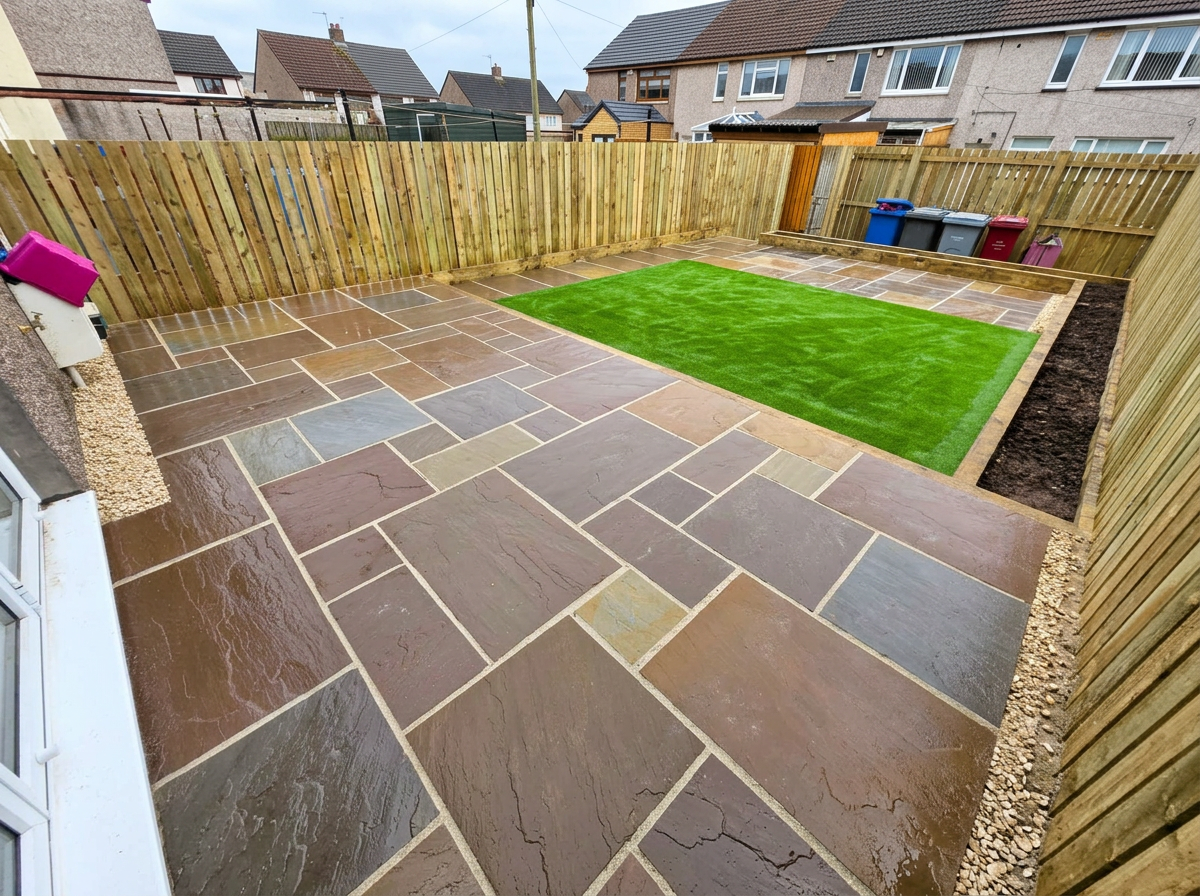
Preventing Marks and Damage
- Use protective feet beneath metal garden furniture.
- Place a suitable protective mat beneath barbecues and cooking areas.
- Avoid dragging furniture, planters or heavy objects over the stone.
- Move plant pots occasionally and clear trapped soil or leaves.
- Do not leave rusty metal objects in contact with wet paving.
- Clean oil, grease, food and drink spills promptly.
- Keep drainage outlets and channels clear throughout the year.
- Use plastic rather than metal tools when removing snow or ice.
Use Low Pressure and Protect the Joints
Excessive pressure can erode softer natural stone, expose the surface texture and damage the joints. Routine brushing and rinsing should be attempted first.
If pressure washing is appropriate, use a wide fan setting, keep the nozzle moving and maintain a sensible distance. Never direct concentrated pressure into the joints, stone edges or drainage channels.
Newly installed paving should not be pressure washed until all bedding, jointing and any protective treatments have fully cured.
Choosing the Correct Treatment
Natural stone is porous and can react to unsuitable chemicals. Always use a product specifically approved for the stone and test it before treating a larger area.
Mud & General Dirt
Allow heavy mud to dry, sweep away the loose material and wash using clean water and a suitable pH-neutral stone cleaner.
Food, Drinks & Grease
Blot excess liquid without spreading it, then use a natural-stone-safe cleaning or degreasing product as soon as possible.
Leaves & Organic Marks
Remove the source and gently clean the area. Established tannin marks may require a specialist product suitable for the stone.
Algae, Moss & Black Spot
Use a treatment confirmed as safe for the specific stone. Protect nearby plants and thoroughly rinse the paving afterward.
Rust or Iron Marks
Do not use brick acid. Natural stone can contain iron particles that react with unsuitable chemicals and worsen discolouration.
Cement or Jointing Residue
Do not scrape or apply general acid. Contact Team Bespoke before attempting to remove suspected installation or jointing residue.
Care for the Complete Paved Area
Airborne seeds can settle within accumulated dirt and organic material around paving joints. Regular sweeping and early weed removal help prevent them from becoming established.
Avoid metal scraping tools, aggressive weed burners and concentrated pressure that could damage the joints or mark the edges of the stone.
Keep drainage channels, outlets and the lower edges of the patio clear. Do not add soil, gravel or other materials that interfere with the designed falls or prevent water leaving the paved area.
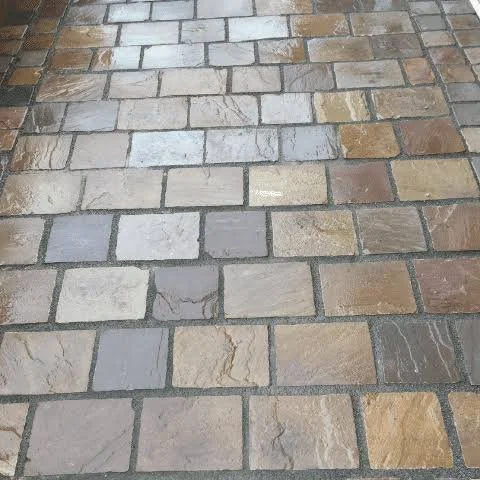
Colour and Texture Will Change Over Time
Every piece of natural stone is different. Variations in colour, texture, veining, fossils, mineral deposits and surface markings are normal features of the material.
Weathering, sunlight, moisture and naturally occurring mineral oxidation can gradually alter the appearance of the paving. These changes are part of the character of natural stone and do not normally indicate an installation fault.
Dark limestone and strongly coloured stone may gradually soften or fade in appearance as it weathers outdoors.
Does Natural Stone Need to Be Sealed?
Some natural stones may benefit from a suitable impregnating sealer, while others may be intentionally left untreated. The correct approach depends on the stone, desired finish and products used during installation.
Check Before Applying Anything
Contact Team Bespoke or the stone supplier before applying a sealer or colour-enhancing treatment.
Expect a Possible Colour Change
Some treatments can darken the stone, enhance its colour or alter the surface finish permanently.
The Stone Must Be Prepared
A treatment should not be applied over dirt, staining, moisture, efflorescence or existing incompatible products.
What to Avoid
Brick acid, hydrochloric acid or general acidic patio cleaners.
Undiluted bleach or chemicals not approved for natural stone.
Mixing cleaning products or applying one treatment over another.
Wire brushes, metal scrapers or highly abrasive cleaning pads.
Concentrated pressure washing against the stone or paving joints.
Dragging heavy furniture, barbecues or plant pots over the surface.
Generic sealers or colour enhancers without compatibility checks.
Allowing wet leaves, soil or standing debris to remain for long periods.
Seasonal Natural Stone Checklist
Spring
- Clear winter debris
- Inspect joints and drainage
- Complete a gentle seasonal clean
- Treat algae before it spreads
Summer
- Clean barbecue spills promptly
- Move pots and furniture occasionally
- Sweep soil and garden debris
- Keep drainage channels clear
Autumn
- Remove fallen leaves regularly
- Prevent debris collecting in joints
- Clear channels and outlets
- Clean leaf marks promptly
Winter
- Remove snow using plastic tools
- Avoid harsh de-icing salts
- Watch for frost and slippery areas
- Keep drainage unobstructed
Maintenance Issue or Installation Concern?
Routine weathering, colour variation, algae, weeds, mineral markings and staining are normally maintenance or natural-material matters. If you notice paving movement, persistent drainage problems, widespread joint failure or another possible installation defect, submit a report for review.
Important: This guide provides general aftercare advice. Always follow the instructions supplied by the stone and cleaning-product manufacturer. Test products on a small, discreet area and never mix chemical treatments. If you are unsure, contact Team Bespoke before proceeding.
← Return to the Aftercare & Advice Hub