
Garden Drainage & Settlement
Guidance on normal ground settlement, surface water, drainage maintenance and recognising when a garden issue should be reported.
Understanding Garden Drainage & Settlement
Landscaped gardens are exposed to changing rainfall, groundwater, soil moisture and seasonal movement. Some temporary surface water and minor settlement can occur without indicating an installation defect.
Regularly clearing drainage routes and avoiding changes to the designed ground levels will help the garden manage water as intended.
The Essentials
Keep Outlets Clear
Remove leaves, soil and debris from channels, gullies and drainage outlets before they restrict the flow of water.
Protect Designed Levels
Do not raise soil, gravel or mulch against paving edges, drainage channels, walls or other finished surfaces.
Allow for Extreme Rainfall
Temporary surface water can occur when exceptional rainfall exceeds the short-term capacity of the ground or drainage system.
Monitor Repeated Problems
Record water that repeatedly remains after ordinary rainfall or significant settlement that continues to worsen.
What to Check When Water Collects
The location, rainfall conditions and length of time the water remains will help determine whether routine maintenance or further investigation is required.
Check the Rainfall
Consider whether the water appeared during ordinary rain, a prolonged wet period or an unusually intense storm.
Identify the Location
Note whether it is on paving, lawn, artificial grass, planting soil, beside a wall or around a drainage outlet.
Clear Visible Debris
Safely remove leaves, soil and loose debris from accessible channels, grates and outlets without dismantling them.
Allow Time to Drain
Monitor the area once rainfall has stopped and record how long the surface water takes to reduce.
Check Recent Changes
Consider whether soil, gravel, mulch, furniture or another item has recently obstructed a drainage route.
Record the Issue
Take clear photographs or video during and after rainfall, showing the affected area and nearby drainage points.
Temporary Water Does Not Always Mean Drainage Failure
During intense or prolonged rainfall, water can arrive faster than the soil, drains and surrounding ground can immediately absorb or discharge it. Short-term surface water may therefore be expected.
The important factors are where the water collects, whether it presents a risk to buildings and whether it begins reducing within a reasonable period after the rainfall eases.
Water that repeatedly remains after ordinary rainfall, flows towards a building or appears alongside significant ground movement should be reported for review.
Protecting Your Garden’s Drainage
- Remove leaves from drainage channels and gratings.
- Clear loose soil, mulch and gravel from paved edges.
- Keep the outlets beneath fences and gates unobstructed.
- Prevent plant growth from covering channels or gullies.
- Do not raise border levels against paved surfaces.
- Keep artificial grass edges free from accumulated debris.
- Monitor downpipes and existing property drainage.
- Check drainage routes after storms and seasonal leaf fall.
What You May Notice
The same visible symptom can have different causes. Consider the recent weather, location and surrounding conditions before taking action.
Water on Paving
Check for blocked channels, leaves, displaced gravel and recent changes to surrounding levels. Monitor how quickly the water clears.
Soft Natural Lawn
Lawns can become soft during prolonged wet weather. Avoid heavy use until the ground has drained and recovered.
Water in Planting Beds
Newly cultivated soil can retain water during wet periods. Stop unnecessary watering and check whether outlets are obstructed.
Water on Artificial Grass
Clear surface debris and surrounding outlets. Temporary water during exceptional rainfall may reduce once the underlying ground catches up.
Small Soil Depressions
Topsoil and planting areas can naturally consolidate after installation, especially following rainfall and watering.
Persistent or Worsening Movement
Repeated sinking, widening gaps or movement affecting hard landscaping should be documented and reported for inspection.
Some Initial Consolidation Can Be Normal
Soil contains air spaces and naturally consolidates following excavation, cultivation, rainfall and watering. Minor changes can therefore appear within lawns and planting areas as the garden settles.
Small depressions in soft landscaping can often be corrected through appropriate topdressing or soil maintenance once the cause has been identified.
Significant or continuing settlement affecting paving, walls, steps, drainage, fencing or other structures should not be filled or repaired before Team Bespoke has had an opportunity to inspect it.
Falls and Finished Levels Must Remain Clear
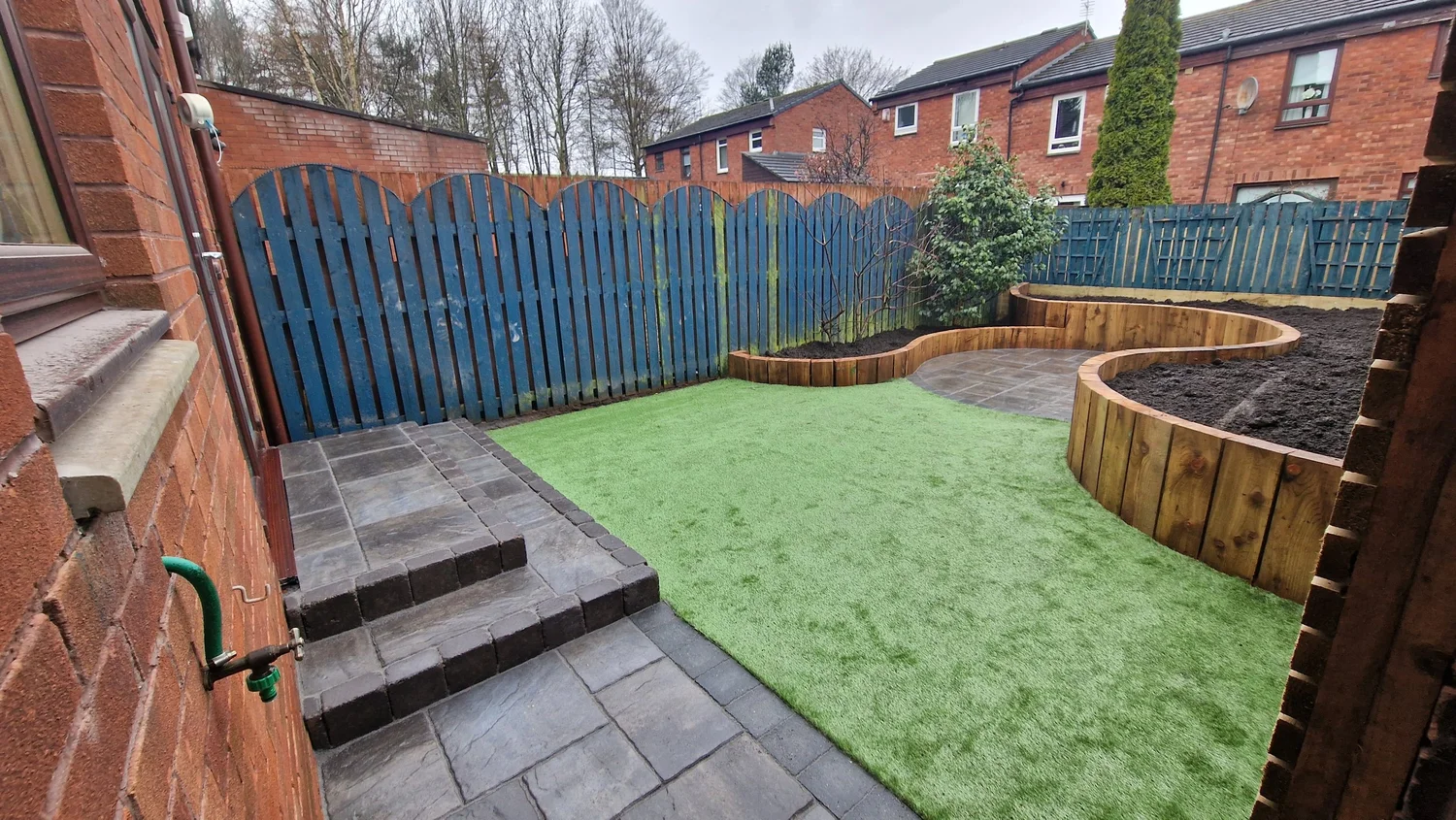
Paving and other surfaces are normally installed with subtle falls that direct water towards an outlet, channel or suitable discharge area. These gradients may not be obvious by eye.
Adding soil, decorative stone, bark, edging or other materials can obstruct the intended route and cause water to collect in a different location.
Do not alter levels, redirect downpipes or connect additional water sources to the landscaped drainage system without professional advice.
Maintain, Monitor or Report?
Maintain
Clear leaves, soil, weeds and other visible debris from accessible channels, gullies and drainage routes.
Monitor
Photograph temporary water or minor settlement and compare the area during different rainfall and ground conditions.
Report
Report persistent water, flow towards buildings, significant repeated settlement or movement affecting installed structures.
Information That Helps Us Investigate
Include photographs or video showing the affected area during rainfall, immediately afterward and once conditions have had time to improve.
Tell us when the issue began, how frequently it occurs, approximately how long water remains and whether any nearby levels, borders, downpipes or drainage routes have been altered.
Do Not Excavate Without Professional Advice
Gardens can contain drainage pipes, water services, electricity cables, gas services and other underground infrastructure.
Avoid Unplanned Digging
Do not excavate suspected drainage routes or settlement areas without first identifying underground services.
Do Not Dismantle Drains
Routine surface debris can be cleared safely, but fixed channels, covers and pipework should not be dismantled without approval.
Protect Buildings
Water entering a building or creating an immediate electrical or structural risk should be treated as an urgent property matter.
What to Avoid
Allowing leaves and soil to block drainage channels or outlets.
Raising border levels against paving, walls or timber structures.
Redirecting downpipes or additional water into garden drainage.
Excavating without checking for underground services.
Removing fixed drainage covers or dismantling installed channels.
Filling significant settlement before the cause is inspected.
Driving machinery over soft, saturated lawns or planting areas.
Judging drainage performance only during an exceptional storm.
Seasonal Drainage Checklist
Spring
- Clear winter debris
- Inspect soft landscaping
- Check channels and outlets
- Record any settlement
Summer
- Check dry-soil movement
- Keep outlets unobstructed
- Avoid unnecessary level changes
- Monitor heavy summer storms
Autumn
- Remove fallen leaves frequently
- Clear channels and gullies
- Cut back obstructing growth
- Prepare for wetter weather
Winter
- Monitor prolonged rainfall
- Avoid walking on saturated soil
- Keep drains free from debris
- Record recurring water issues
Maintenance Issue or Installation Concern?
Blocked channels, accumulated debris, saturated soil during prolonged rain and minor settlement within soft landscaping are normally maintenance or environmental matters. Persistent drainage failure, significant repeated settlement or movement affecting installed structures should be reported for review.
Important: This guide provides general aftercare advice. Drainage performance is affected by rainfall intensity, existing ground conditions, surrounding properties, groundwater and third-party drainage. Do not excavate or alter installed drainage without professional advice. If you are unsure, contact Team Bespoke before proceeding.
← Return to the Aftercare & Advice Hub