
Decorative Gravel Aftercare
Practical guidance for maintaining decorative gravel, managing weeds and debris, preserving edging and keeping gravel areas tidy and free-draining.
Keeping decorative gravel looking its best
Decorative gravel is a practical, attractive and relatively low-maintenance landscaping material. However, regular light care is still needed to control debris, redistribute displaced stones and prevent weeds from becoming established.
The guidance below will help keep your gravel areas neat, stable and free-draining throughout the year.
Rake the surface regularly
Use a suitable garden rake to redistribute gravel that has moved through walking, vehicle use, pets or heavy rainfall. Work gently to avoid disturbing the underlying membrane or sub-base.
- Level shallow tracks and low areas as they appear.
- Move gravel away from drainage channels and door thresholds.
- Avoid creating deep piles against walls, fencing or timber.
Remove leaves and debris
Leaves, soil and organic debris should be removed before they break down. Decomposed material can collect between the stones and create suitable conditions for weeds, moss and algae.
- Use a leaf blower on a low setting where practical.
- Remove larger debris by hand or with a soft rake.
- Take care not to blow or rake gravel out of the landscaped area.
Deal with weeds early
A correctly installed membrane helps suppress weeds from below, but it cannot prevent airborne seeds from settling into dust and organic matter on the surface.
- Remove weeds before they establish deep roots or produce seeds.
- Pull them carefully to avoid damaging the membrane.
- Only use weed treatments suitable for the surrounding planting.
Protect the edging
Edging keeps decorative gravel contained and separates it from lawns, planting beds, paving and other surfaces. Check it periodically, particularly beside frequently used paths and driveways.
- Do not allow gravel to build up above the edging.
- Redistribute escaped stones before they become a hazard.
- Report loose, damaged or noticeably displaced edging.
Movement and settlement
Some movement is normal in loose decorative aggregates. Regular use, weather, pets and garden maintenance can all cause stones to migrate or expose small areas beneath.
Rake the gravel back into place and maintain an even covering. If a larger quantity has been lost, use the same stone type, size and colour wherever possible. New gravel may initially look different because the existing material has weathered.
Excessively deep gravel can become difficult to walk across and may spill onto neighbouring surfaces. Never raise the level against damp-proof courses, doors, air bricks, timber or drainage outlets.
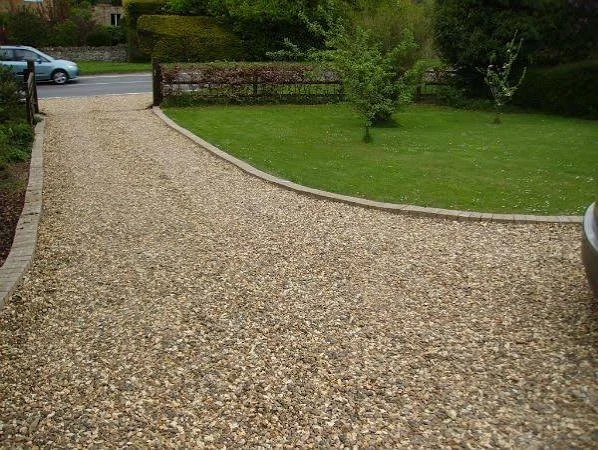
Cleaning decorative gravel
Routine debris removal and occasional gentle raking are normally the safest cleaning methods. Pressure washing is generally unsuitable because it can scatter stones, disturb the surface and expose the membrane beneath.
If a small area becomes muddy, allow it to dry before gently raking and removing the affected surface debris.
Stains and contamination
Oil, paint, cement and other contaminants can be difficult to remove from loose aggregates. Do not wash chemicals through the gravel into the soil, planting beds or drainage system.
The safest solution is often to remove the contaminated stones and replace them with matching clean material.
Drainage and outlets
Keep drainage channels, gullies and surface-water outlets clear of loose gravel, leaves and silt. Gravel should not cover inspection points or block water from reaching its intended outlet.
Persistent standing water or repeated washing-out may indicate a drainage or ground issue requiring inspection.
Winter care
Use plastic or rubber-edged tools when clearing snow to reduce the chance of moving or damaging the aggregate and surrounding edging.
Take care with de-icing products near lawns and planting, and always check that the chosen product is suitable for adjacent materials.
What should be reported?
Routine gravel movement, surface weeds, debris and gradual weathering are normal maintenance matters. Please contact Team Bespoke if you notice:
- Significant or repeated sinking in one particular area.
- Deep rutting that quickly returns after the gravel is levelled.
- Failed or substantially displaced edging.
- Persistent standing water or signs of a drainage problem.
- Movement that may relate to the installed sub-base.
This guide provides general aftercare advice. Product requirements can vary, so always follow any specific instructions supplied with your chosen materials. Our workmanship guarantee remains subject to Team Bespoke’s terms and conditions.